
Contractors already encounter attic odor problems during insulation, restoration, cleaning, and animal-related work. Attic Fresh gives an attic odor elimination contractor another straightforward service to offer when organic waste, bacteria, urine-related odors, nesting material, or contaminated insulation is part of the job. It helps contractors solve more of the problems their customers bring them while creating another service opportunity for the business.
Become a dealer with The Attic Depot to add contractor-focused attic products, training, sales resources, and ongoing support to your business. Enrollment is free, with no contracts and no order minimums.
Attic Fresh is not a complicated new business line. It fits into work many roofing, insulation, HVAC, pest-related, and attic-restoration contractors already perform. This guide explains what the product does, when to recommend it, and how to build it into a clear service customers can understand.
What Attic Fresh is and what it does
Attic Fresh is a bio-enzymatic treatment for organic waste and odor-related attic conditions. The current product information describes the treatment as a deodorizer and disinfectant for attic spaces. Its enzyme-producing bacteria break down organic material into water-soluble nutrients, helping address the source of odors instead of simply covering them with fragrance.
The current Attic Fresh product sheet describes the product as a treatment that deodorizes and disinfects attics, breaks down organic waste, and can be used on insulation, decking, carpeting, upholstery, and other fabrics. Use the current official product materials for the product description and listed characteristics.
The official MDS and SDS identify the product as a bio-enzymatic treatment for organic waste and provide the current handling, storage, first-aid, and hazard information contractors should keep with their product materials. Use the current product directions and MDS/SDS as the authority for job-specific handling.
Attic Fresh addresses the source of organic odors
Attic odors can come from rodent urine and waste, nesting material, bacteria, animal activity, food residue, damp organic matter, and other contaminants that collect over time. Those materials may remain in insulation, on attic decking, around framing, or on other surfaces after the original issue has been addressed.
Air fresheners and fragrance-only sprays change the smell temporarily. Attic Fresh is designed to help break down organic material and deodorize the affected area. It leaves an initial citrus scent that dissipates, but the main value is the treatment of odor-causing organic matter, not a lasting fragrance.
It is designed for practical contractor application
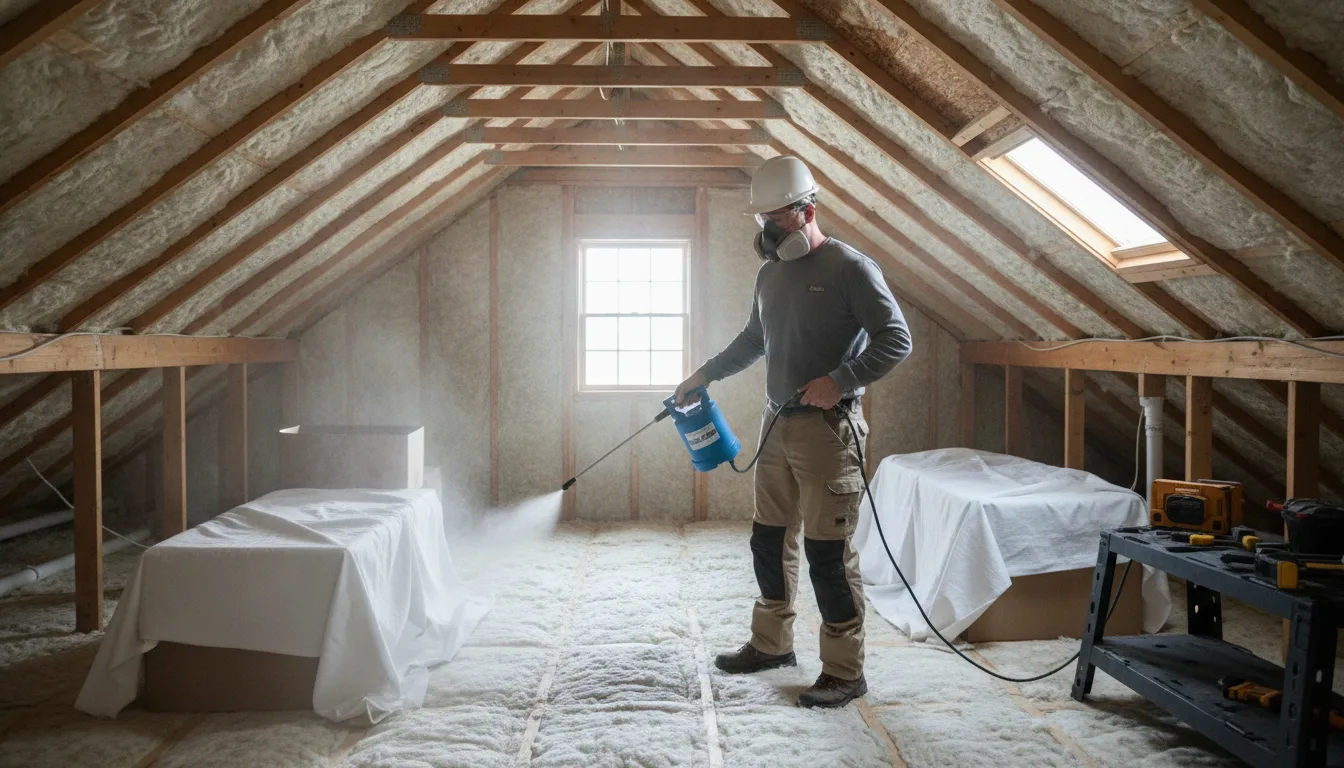
The Attic Fresh Enzyme product page describes application with a standard pump-up sprayer. Contractors can apply it to affected insulation, attic floors, roof decking, wood framing, and other appropriate surfaces. That simple application method makes the product easy to add to an existing attic workflow.
Where contractors can recommend Attic Fresh
The strongest Attic Fresh recommendation starts with a service the contractor is already performing. When the job reveals an odor-related condition, the contractor can add a treatment step that supports the larger scope and gives the customer a more complete result.
| Existing service | Attic Fresh opportunity | Customer value |
|---|---|---|
| Insulation removal and replacement | Treat affected attic areas after old insulation is removed and before new insulation is installed. | A cleaner, fresher attic as part of the insulation upgrade. |
| Insulation top-off | Pretreat appropriate surfaces before adding new insulation when odor-causing organic material is present. | Another solution for customers who want improved attic performance without ignoring odor concerns. |
| Attic cleaning or restoration | Add a deodorizing and disinfecting treatment to the cleaning or restoration scope. | A more complete service and a clearer finished result. |
| Animal or rodent-related work | Use Attic Fresh after the affected materials and conditions are addressed, following current product directions. | Help reduce lingering organic odors that remain after the initial issue is handled. |
Insulation removal and replacement
Full insulation removal is one of the clearest opportunities for Attic Fresh. After the existing insulation is removed, the contractor can treat affected attic floors, joists, decking, framing, and other suitable surfaces before moving forward with the new insulation. The product becomes part of a natural sequence: remove the old material, treat the attic, then install the new insulation.
This approach lets the contractor solve more of the customer's problem in one project. The customer does not have to coordinate a separate odor service when the insulation crew can include the treatment in the overall scope.
Insulation top-offs and new insulation work
Insulation top-offs create another practical opening. A contractor may find that the existing attic has an animal odor, stale smell, or other organic condition before adding new material. Attic Fresh can be offered as a pretreatment step when it fits the product directions and the condition of the attic.
Position the service around the customer's goal: improve the attic while addressing the odor issue already present. This is more useful than treating insulation as the only product in the conversation. The contractor can offer a cleaner, more complete attic upgrade and create an additional line item from work already connected to the visit.
Attic cleaning and restoration
Attic cleaning and restoration projects often uncover the exact conditions Attic Fresh is designed to address. A contractor may find nesting debris, organic residue, animal-related odor, or affected insulation and decking. Adding Attic Fresh gives the contractor a way to extend the service from removal and cleaning into deodorizing and disinfecting the treated space.
Describe the scope in plain language. Tell the customer which areas will be treated, how the treatment fits into the restoration sequence, and what work is included separately. The product should support the restoration plan, not make the proposal harder to understand.
Rodent and animal-related attic conditions
Rodent activity and animal entry can leave behind urine, waste, nesting material, and persistent organic odors. Once the contractor's agreed scope addresses the affected materials and the source condition, Attic Fresh can be an appropriate addition for treating remaining odor-related areas. It gives contractors a useful follow-on service after the initial animal-related work.
For contractors who already serve insulation, pest, roofing, or restoration customers, this can be a natural cross-sell. The customer already has a problem in the attic, and the contractor can offer one more step toward a cleaner, fresher space.
How an attic odor elimination contractor can add Attic Fresh to existing jobs
The recommendation does not need to sound like a complicated remediation process. Keep the conversation tied to what the crew sees and the service the customer already requested.
Start with the job condition
Ask whether the customer has noticed a musty, stale, animal, or urine-related odor. During the attic assessment, look for organic material, affected insulation, nesting debris, and areas where the odor is strongest. Then explain that Attic Fresh is an available treatment for the odor-related condition as part of the broader attic service.
A simple recommendation might sound like this: "We found an odor-related condition in the attic. Since we are already removing or adding insulation, we can treat the affected areas with Attic Fresh before we finish the insulation work." That explanation is direct, useful, and connected to the work already underway.
Make the service a clear line item
Use a name customers can understand, such as "Attic Fresh odor and disinfection treatment" or "Attic odor treatment with Attic Fresh." List the general areas included, the point in the project when treatment occurs, and any separate removal or repair work. A clear line item helps customers see the additional value instead of treating it as an unexplained chemical charge.
Have questions about adding Attic Fresh to insulation, cleaning, or restoration work? Call The Attic Depot at 832-379-5757 for product and technical support, or review the contractor product lineup.
How Attic Fresh fits into an insulation and restoration workflow
Attic Fresh is easy to incorporate because the product can follow the natural order of an attic project. The exact sequence depends on the job, but the basic workflow is straightforward.
- Assess the attic: Identify the odor concern, affected materials, insulation condition, and areas that need treatment.
- Complete the planned removal or cleaning: Remove or clean materials included in the contractor's scope before treating the exposed areas.
- Apply Attic Fresh: Use the standard pump-up sprayer and apply the product to the appropriate affected surfaces according to current product directions.
- Continue the attic project: Move forward with insulation replacement, a top-off, restoration work, or the next agreed service step.
- Explain the completed scope: Tell the customer where Attic Fresh was used and how it supports the overall attic improvement.
For an insulation replacement, that can mean treating attic floors and other affected surfaces after the old insulation is removed and before new insulation is installed. For a top-off, it may mean treating suitable areas before adding material. For attic cleaning, it can be part of the final deodorizing and disinfecting stage.
Keep the work aligned with the current Attic Fresh application information and the official MDS/SDS. Contractors do not need to turn an ordinary service conversation into a long technical presentation. They need a clear scope, a product they understand, and support when questions arise.
Turn Attic Fresh into another service opportunity
Attic Fresh can help contractors increase the value of jobs they already perform. It creates another way to solve a customer problem, another line item to present, and another reason for customers to choose a contractor who can handle more of the attic in one visit.
Price the work from the actual scope
Do not use a one-size-fits-all price for every attic. Build the service from the work involved, including access, preparation, product use, labor, equipment, and the size and condition of the affected area. If removal, disposal, or additional repairs are needed, keep those items clear in the proposal.
The Attic Depot does not publish dealer pricing for homeowners. Authorized dealers can use their own labor, overhead, and margin model to price the completed service for their market. The important point is to sell the value of the outcome: a more complete attic service that addresses a problem the customer already has.
Offer it to customers you already serve
Attic Fresh can create opportunity across several existing customer conversations:
- An insulation customer who wants a top-off but has a stale or animal-related attic odor.
- A restoration customer who needs a cleaner, fresher attic after old insulation is removed.
- A homeowner whose attic cleaning project uncovered organic odor sources in insulation or decking.
- A roofing, HVAC, pest, or energy-efficiency customer who needs another attic problem solved during an existing visit.
This is the contractor advantage. You are not starting with an unfamiliar audience or a separate marketing funnel. You are adding another solution to work your team already knows how to sell and perform.
Ready to add Attic Fresh to your attic services? Contact The Attic Depot at 832-379-5757 to learn about dealer support, product education, and the next step for your business.
Why contractors choose The Attic Depot for product support
Adding a service is easier when the supplier supports more than the product shipment. The Attic Depot works with professional contractors through a dealer-first model that includes product education, installation guidance, sales resources, marketing support, technical help, and ongoing dealer support.
That partnership helps contractors introduce Attic Fresh with more confidence. Your team can learn where it fits, use the product information and MDS/SDS as references, and build a service offer that matches the work your company already performs. The Attic Depot also does not compete with its dealer network by selling directly to homeowners.
For contractors, that means Attic Fresh is not just another item to put on a shelf. It is a way to add another customer solution, create more ticket opportunities, and grow the business with support from a wholesale partner.
Common questions about adding Attic Fresh to attic services
What types of attic odors is Attic Fresh designed to address?
Attic Fresh is designed for organic odors associated with rodent activity, urine, bacteria, animal waste, nesting material, contaminated insulation, and other organic waste. The product information describes it as a bio-enzymatic treatment that deodorizes and disinfects attic spaces.
Can insulation contractors use Attic Fresh before installing new insulation?
Yes. The product information describes use on affected attic surfaces and treatment before new insulation installation. Contractors can include it after removal and cleaning or as a pretreatment step when adding or replacing insulation. Follow current product directions for the specific job.
Is Attic Fresh difficult to apply?
The product page describes application with a standard pump-up sprayer. That makes it a practical addition to attic cleaning, restoration, insulation, and animal-related work already performed by contractors.
How should contractors explain the service to customers?
Connect the treatment to the condition found and the work already planned. Explain that Attic Fresh is designed to deodorize and disinfect affected attic areas, then list the included surfaces and the point in the project when the treatment will occur.
What should contractors review before using the product?
Use the current Attic Fresh product information and official MDS/SDS for product description, application, handling, and storage guidance. If the attic has a separate moisture issue, correct that condition as part of the larger project. The EPA moisture and mold guidance is a useful general reference for correcting moisture problems before finishing affected building materials.
Attic Fresh gives contractors another practical way to help customers, strengthen existing attic services, and create additional revenue opportunities. When the job involves insulation, cleaning, restoration, animal-related odors, or other organic conditions, make Attic Fresh part of the conversation. The Attic Depot provides the products, education, and support to help contractors add the service with confidence.